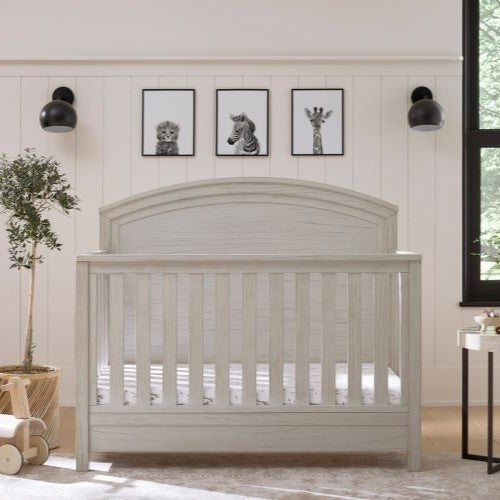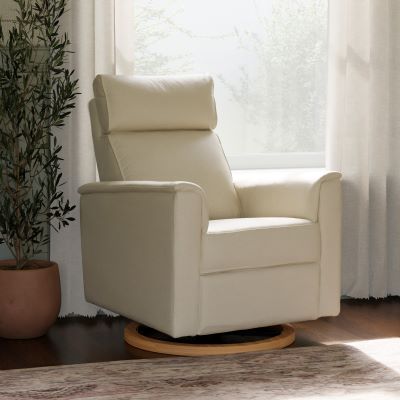
A nursery doesn't have to be finished all at once. It just has to be ready in the right order. Planning a nursery doesn’t have to happen all at once. With a little time and a loose timeline, the process becomes a series of smaller, more manageable decisions, spread across the months leading up to your baby’s arrival. Larger pieces, like the crib, dresser, and nursery chair, are a good place to start, as they often have longer delivery times. From there, you can build out the rest of the room at a pace that feels right for you. Weeks 12–16Measure and choose Weeks 16–20Open the registry Weeks 20–24Order the furniture Weeks 28–32Deliver and assemble Weeks 33–36The finishing layer When should you order nursery furniture? Order the crib, dresser, and glider between weeks 20 and 24 of pregnancy. Most pieces arrive within six to eight weeks, and made-to-order upholstery can take ten to sixteen weeks, so ordering by week 22 leaves room for delivery, assembly, and airing out well before week 36. Bedding, décor, and shelving can come later. Weeks 12–16Measure the room, choose the anchor pieces Before anything is ordered, the room needs measuring: wall lengths, window and door positions, outlets, radiators, and the swing of the closet door. A crib needs a wall away from windows, cords, and anything a standing child could reach. A recliner needs clearance behind it. Those two placements usually decide everything else. A rough sketch on paper is enough. Mark the walls in feet, draw the crib, dresser, and chair to scale, and leave at least three feet of clear path between them. The room will change many times between now and the first year, but the bones rarely do. This is also when to settle on the three anchor pieces: the crib, the dresser, and the chair. They're the largest, they take the longest to arrive, and they set the tone of the room for years. Live with it first Finishes look different in every light. A few wood and fabric swatches ordered now give you a month to see them morning and evening, beside your walls and floors, before committing. Order free swatches Weeks 16–20Open the registry The registry sweet spot sits between weeks 16 and 20. It gives you a comfortable window to explore your options, decide what matters most to your family, and start planning for your baby’s arrival. Larger pieces belong on the registry too. Many families now group-gift the crib or the glider, and adding them early gives everyone a chance to coordinate. If you plan to buy the furniture yourself, the registry can hold everything else: the mattress, the sheets, the small things that make the room work. Weeks 20–24Order the crib, dresser, and chair This is the window that matters most. Lead times vary by piece and by how it's made. Typical lead times at Namesake Piece Typical lead time Order by Crib Ready to ship! Shop Now! Week 22 Dresser Ready to ship! Shop Now! Week 22 Glider or recliner Ready to ship! Shop Now! Week 20 Crib mattress Ready to ship! Shop Now! Week 32 Wall shelves, bookcases Ready to ship! Shop Now! Week 30 Bedding and décor Ready to ship! Shop Now! Week 34 Ordering around week 22 gives in-stock pieces time to arrive by week 30 and made-to-order seating time to arrive by week 36, with a margin for anything unexpected. If the chair is made to order, consider ordering it first, closer to week 20. Large orders or bundles may ship in more than one delivery. Ordering at the same time also makes it easier to see the room together. The crib, dresser, and chair are the pieces that need to feel like they belong to each other, even when they don't match. The three anchor pieces The piece the rest of the room is arranged around. Cribs A changing station now, a dresser for years after. Dressers Relax knowing our performance fabric will help keep your recliner safe from spills. Seating Ordering the three together? They can come home as one set. Bundle & Save Weeks 28–32Delivery, assembly, and letting things air out Furniture that arrives in this window has time to be assembled carefully, not hurriedly. When boxes arrive, open them and check every piece for damage before the packaging goes out; a scratch reported in the first few days is much simpler to resolve than one found a month later. Read the instructions before you start, and keep every piece of hardware, along with the manual, in a labeled bag. The crib will be taken apart and rebuilt at least once as it converts, and the same bolts will matter then. On assembly day Two people make it easier. Cribs and dressers are heavy and awkward to square up alone. Set the crib mattress support at its highest position for a newborn, then lower it as your baby begins to sit and stand. Anchor the dresser and any shelving to the wall the same day they go up, using the anti-tip hardware included. Tighten everything again after a week. Wood settles, and hardware can loosen slightly as it does. New furniture and mattresses also benefit from a few weeks with the windows open. Pieces with GREENGUARD Gold Certification are tested for low chemical emissions, and a little fresh air still makes a room feel more settled. It's one more reason not to leave assembly to the final week. Weeks 33–36The finishing layer This is where the room starts to feel lived in. The crib mattress and fitted sheets. Wall shelves and art, hung well away from the crib. A rug, a lamp with a warm bulb, a basket by the chair for the things you'll want within reach at night. None of these have long lead times, which is exactly why they can wait. By now you also know how the room actually feels, where the light falls in the afternoon, and where you naturally stand when you walk in. Those are better guides for the last layer than any plan made in the first trimester. What can wait until after the baby arrives Less than most checklists suggest. This can wait The toddler bed conversion kit, which won't be needed for two years or more. Most toys and books, which tend to arrive on their own. Blackout curtains, if the first months are spent room-sharing, as the AAP recommends for at least the first six months. A second chair or play table, which makes more sense once you see how the room is used. Wall décor and finishing touches. A room that keeps evolving usually ends up feeling more personal than one completed before anyone lived in it. This shouldn't A crib or bassinet that meets the current safety standard A firm, well-fitting mattress A car seat Everything else is negotiable. What crib safety means in 2026 Shorter runways: adoption, surprise timelines, second babies Not every family gets twenty weeks. Adoption or a short timeline Order in-stock pieces first and choose in-stock fabrics over custom. A bassinet in your own room can cover the first months while the nursery comes together. An early arrival The same applies. Nothing about the room has to be finished for the first few weeks home. A safe place to sleep is the only requirement. A second or third baby The room often already exists. The question is what to keep and what's changing: a second crib, a conversion kit, or simply a fresh mattress and a new chair. Shop our Kids collection here! A checklist by trimester Weeks 1–13 First trimester Choose the room and measure it Note windows, outlets, vents, and door swings Order free wood and fabric swatches Weeks 14–27 Second trimester Choose the crib, dresser, and chair Open the registry (weeks 16–20) Order made-to-order seating (around week 20) Order the crib and dresser (by week 22) Weeks 28–40 Third trimester Receive and assemble furniture (weeks 28–32) Anchor the dresser and shelving Let the room air out Add the mattress, sheets, and finishing layer (weeks 33–36) Questions we hear often How long does nursery furniture take to arrive? In-stock cribs, dressers, and seating typically arrive in six to eight weeks. When should I buy the crib mattress? Mattresses arrive quickly, so ordering around week 32 is usually enough. Make sure it's firm, flat, and fits the crib snugly, with no more than two fingers' width between the mattress and the frame. What if the baby arrives before the nursery is ready? Nothing about the room has to be finished for the first weeks home. The AAP recommends room-sharing for at least six months, so a safe bassinet or crib in your own room is all that's needed while the nursery comes together. The order matters more than the speed. A room assembled in the right sequence, without rushing the last few weeks, is ready long before it needs to be. Order free swatches